
%20(1).png)

Business Support
About Us
Supporting Business. Shaping Watford.
Watford Borough Council are recognised as one of the most forward-looking and creative district councils in the UK. They thrive on thinking differently and pushing the boundaries to achieve more for Watford – they are ambitious for the town, residents, and business community. The Economic Development Team at Watford Borough Council is here to champion the success of local businesses and drive inclusive growth across the area. The Team aids Watford businesses to start and grow by offering advice and guidance, delivering events such as Watford Business Connect, and fully funded support programmes such as Fit to Bid. They assist in navigating council services and maximising business operations in Watford through initiatives like the Watford Business Pledge and the Generation Watford careers fairs. Together with the Elected Mayor, the team regularly meets with local businesses, ensuring the council remains accessible and supportive. They also have strong partnerships with local business support providers - collaborating with Hertfordshire Futures, Hertfordshire Growth Hub, Wenta and others to ensure the Hertfordshire ecosystem of support works together to best support local businesses
Whether you're a start-up looking for guidance, a scale-up seeking investment or a global brand exploring relocation, our team offers tailored support to help you thrive.
To contact the team, please email economicdevelopment@watford.gov.uk

START, GROW & THRIVE
Watford offers robust business support with a variety of resources and networks to help local enterprises thrive and grow.
The Economic Development Team at Watford Borough Council is here to champion the success of local businesses and drive inclusive growth across the area. We work directly with local enterprises, investors, developers and partners to ensure Watford remains one of the most dynamic and well-connected commercial centres in the UK.
Whether you're a start-up looking for space, a scale-up seeking investment or a global brand exploring relocation, our team offers tailored support to help you thrive.
To contact the team, please email

Dacorum, St Albans, Hertsmere, and Watford Councils are working with Branduin Business Support Services to deliver a fully funded supply-chain business engagement, skills development and bid support package for SMEs based in the four Boroughs. This programme is to help local businesses enhance their skills and capability to bid for contracts at council procurement, construction and infrastructure projects, and large private sector buyers. The support includes specialist skills training webinar workshops, Meet the Buyer events, and confidential 1-2-1 tender business advice sessions with an expert advisor to help you identify and overcome your key challenges, navigate the complexities of the supply chain, and be in a better place to win new contracts.
SME suppliers based in SW Herts – please register for the programme here: SW Herts UKSPF Supplier Ready Programme
To help businesses ‘Learn, Connect, Collaborate’, these events are an exclusive opportunity for Watford's exceptional business community to convene, learn, and network. Contact the Economic Development team to find out when our next event is: economicdevelopment@watford.gov.uk
Want to start or scale up a business? Hertfordshire Growth Hub is the entry point to all business support advice, information and resources in the county.
As the trusted growth experts, we join up national and local business support making it simpler for you to find the help you need, when you need it.
Since 2015, we have helped over 14,000 businesses achieve their goals and our team of knowledgeable business advisers are on hand to provide tailored support.
Part of Hertfordshire Futures, the Growth Hub service is brought to you by a team of business support specialists pooling their expert knowledge.
Since its formation in 2011, the LEP has played a pivotal role in determining and addressing local economic priorities. A dedicated team are focused on driving the local economy by boosting inward investment, key sectors, clean and inclusive growth by providing skills leadership, detailed economic intelligence, and a comprehensive package of support to Hertfordshire’s business community. This service offer continues under the new brand identity Hertfordshire Futures and its family of sub-brands and programmes of support:
Hertfordshire Opportunities portal (HOP)
HOP enables employers to reach and recruit their future talent, and upskill and provide progression opportunities for existing staff. This includes a suite of Skills Bootcamps.
Details here-https://www.hopinto.co.uk/employers/hertfordshire-opportunities/
The Hertfordshire Careers Hub enables greater collaboration between clusters of schools by linking Careers Leaders, Enterprise Advisers and the Cornerstone Employer Group (a network of local businesses).
Hertfordshire Film Office was established in response to rapid and large-scale growth of the Film and TV sector, in order to maximise the potential of the sector and provide a coordinated gateway for productions looking to film in Hertfordshire.
The Connect To Work programme gives employers the chance to start or strengthen their disability/inclusion strategies with guidance from Supported Employment specialists. Delivered locally by Step2Skills, this free programme helps create more accessible workplaces.
Better Business for All (BBFA) was formed in 2013 and works to boost business productivity and growth by making it easier for businesses to access the regulatory support they need from Local Authorities such as Trading Standards, Environmental Health, Licensing and others.
Wenta is one of England's largest enterprise agencies. We're an independent, not-for-profit, social enterprise that exists to make it easier and greener to start and run a successful business. Watford is home to The Wenta Business Centre on Colne Way, just off the A41 which is an ideal location for both new and growing businesses. Free business advice (via telephone, live chat or in person) and webinars are available to all Watford residents and are run by Wenta’s experienced team of business advisors. Whether its advice on how to start a business, how to get your business online or sales tactics, the team can help.
Wenta also offers affordable, flexible and self-contained workspace for rental from offices to workshops, available on monthly terms and in a range of sizes. They are ideal if you need to find or re-locate your workspace to a more flexible and affordable option. The centre also offers a range of virtual office services and on-site meeting rooms for hire.

KNOWLEDGE HUB
Find valuable information to help your business act responsibly across the five commitments of the Watford Business Pledge.
Whether you're a start-up looking for space, a scale-up seeking investment or a global brand exploring relocation, our team offers tailored support to help you thrive.
The Knowledge Hub has a plethora of resources and general business support and provides information to assist you with your Watford Business Pledge application!
eek guidance on reducing water use in industrial processes
Turn off taps when not in use
Only use the dishwasher and washing machine when fully loaded
Encourage staff to report any leaks promptly and fix them to prevent water wastage
Create and regularly review a climate/sustainability action plan. Consider the areas below:
-
Net Zero Emissions: Net zero means measuring and reducing the greenhouse gases (GHGs) emitted through operations and activities (both direct and indirect), and then, for those emissions which can be eliminated, offset to achieve net zero. The plan should outline how you will achieve Net Zero emissions by 2050 in the short-term and medium term.
-
Assessment and reports: Log your business's emissions from direct energy consumption (fuel) and indirect energy consumption (electricity), commonly known as Scope 1 and Scope 2, respectively. Find guidance on how to do this here.
-
Watford Environmental Manager's Network: This is a free network where you can gain insight into how other businesses are achieving their sustainability goals and share practices. To join the network please email: sustainability@watford.gov.uk
-
Wenta Net Zero: Wenta provide Free support to help businesses in reduce their carbon footprint. Find out more and access free support here.
Business with more than 50 employees should also consider the below areas:
-
Assessment and reports: Log your businesses indirect emissions from the supply of goods and services (supply chain), commonly known as Scope 3. Please find guidance on how to do this here.
-
Setting targets: Have a trajectory towards achieving Net Zero emissions aligned with capping global warming at 1.5 degrees Celsius. Find guidance on how to do this here.
-
Identify ways to reduce energy: For example
Travel Planning: Promote and encourage staff to explore environmentally friendly alternatives for community to work, and reduce travel emissions. Find guidance on how to do this here.
-
Promote alternatives to driving to work: such as walking, cycling or using public transport
-
Incentives: Provide incentives for employees who choose sustainable travel options, such as subsidies for public transport passes or bike-share memberships.
-
Install provisions: These could be electric vehicle charging stations at the workplace
-
Alternative working arrangements: Encourage remote working to reduce the need for daily commuting and/or flexible work hours to allow employees to avoid peak commuting times, reducing congestion and emissions.
-
Switch fleets: Invest in electric vehicles or cargo bikes wherever possible.
-
ModeShift: This is a membership organisation offering to support travel delivery. Find out more here.
Natural Environmental Ecosystems: Implement strategies to reduce food wastage, minimise air pollution and conserve water resources, while promoting the integration of green spaces as natural environments, where feasible.
-
Improve local biodiversity: This can be done by identifying ways and taking actions to incorporate nature into your business-operated premises - plant trees or a wildflower patch, create a mini pond, log shelter or hedgehog corridor.
-
You can use the below resources to help you achieve this:
How to help wildlife at work - The Wildlife Trust
Biodiversity Benchmark - The Wildlife Trust
-
Identify and take action: This is to minimise pollution to the local area, such as light and air pollution. This both improves local biodiversity and human health.
-
Use the below resources to help you achieve this:
International Dark Sky Association - Five Principles for Responsible Outdoor Lighting
World Economic Forum - 5 Ways Businesses Can Clear Up Air
International Day of Clean Air
Office-based activities: Identify ways and take actions to reduce water usage for office-based activities, as well as any industrial processes. Install water-saving devices and increase staff awareness around water-saving behaviour.
-
Use the below resources to help you achieve this:
Water Saving Tips - Affinity Water
Nature and natural environments: Explore ways to incorporate these into your businesses. For example:
-
Designated areas: These can be gardens, green roofs, or outdoor seating surrounded by plants and trees
-
Maximise natural light: Indoor through large windows, skylights, or glass walls to reduce reliance on artificial lights
-
Use of plants: Plants can be enhanced indoor air quality
-
Meetings: Hold meetings in outdoor green spaces
-
Minimise pollution: Identify ways and take action to minimise any pollution impacts your business may have on the local area, such as light pollution, air pollution, land pollution and water pollution.
Responsible resource use: Adopt waste reduction and resource conservation measures to promote sustainability and responsible management. For example:
-
Identify and action: Find methods to reduce water usage for office-based activities, as well as any industrial processes. Methods include:
Seek guidance to reduce energy used in industrial processesSeek guidance to improve the energy efficiency of commercial buildings and workspacesTurn off lights and electronics when not in useUpgrade to energy-efficient office equipment such as computers, printers, copiers and appliances to reduce energy consumption and operating costsSwitch to green energy suppliersSwitch to energy-efficient LED bulbs-
Source sustainable materials: This will be for use in the production and operations
-
Certifications: Source materials and products that are certified as sustainably sourced or produced
-
Prioritise sustainable sourcing practices: This can be done by selecting suppliers and partners who adhere to ethical and environmental standards
-
Procurement: Embed sustainability in procurement policies and encourage or require suppliers to do the same
-
Single-use plastic: Reduce the use of single-use plastic and opt or reusable alternatives
-
Packaging: Reduce packaging and encourage the use of reusable materials and containers
-
Digital documents: Implement digital document management systems and encourage electronic communication and documentation to reduce paper usage
-
Printing: If you do need to print documents, ensure the printers default settings are to double-sided, encourage printing only when necessary, and use recycled paper to minimise paper use
Waste Management:
-
Reduce waste going to landfill: Produce a 'waste hierarchy' which conveys the principles or reduce, reuse, recycle, recover - then landfill
-
Policies: Be ready for the new trade waste recycling policies being implemented in 2025. For guidance and information please go here or visit Watford Council - Simpler Recycling
-
Food waste: Identify ways and take action to reduce food waste and promote plant-based alternatives
If you provide food either to employees or customers:
-
Plant-based food: Ensure that there is at least one plant-based menu option. Plant-based food contains no animal meat or by-product, such as meat, fish, dairy, eggs, gelatine or honey.
-
Use the below resources to help you achieve this:
The simple formula to cut your diet's carbon footprint - BBC Food
Plant-based recipes - BBC Food
-
Minimise food waste: Any leftover catering to be donated to be homeless shelters, food banks and food charities
Businesses with more than 50 employees should also consider the below:
-
Carbon implications: Provide information on the carbon implications of your food choices. This requires the emissions of each food choice to be calculated and then clearly displayed. Examples can be found at restaurants like Wahaca, Churchill College and Camille Thai
Adapting to change:
-
Demonstrate adaptability to embrace sustainability changes, ensuring a resilient and environmentally responsible approach to operation
-
Climate change presents a severe risk to how we operate, both in the short and long term. For instance, we are seeing warmer, wetter winters in the UK, with increased flooding. This can impact how we travel, access to services and the price of commodities. Businesses need to be aware of these increased risks and opportunities to alleviate or mitigate them.
-
Address the climate and ecological emergency in your business risk register
UK Climate Risk Register - Climate Change Committee
Independent Assessment of UK Climate Risk - UK Climate Risk
Climate Adaption Toolkit - Local Partnerships
How to develop a climate risk register - NI Adapts
-
Risk register: Include environmental and climate risk within your business risk register, business continuity plans and include actions to mitigate and adapt
-
Staff development: Offer staff training and education programmes to employees to raise awareness and build capacity for sustainable practices
-
Embrace change: Be innovative and adaptable to stay ahead of emerging sustainability trends and regulations
-
Goals: Regularly monitor and report progress towards sustainability goals, encouraging transparency and accountability
Resources
Sustainability Pledge Scope 1&2
Sustainability Pledge Scope 3
Sustainability Pledge Staff Travel
Simpler Recycling Guide
-
Governance and Organisational Commitment: Implement policies and measures to ensure accountability, transparency and commitment to environmentally sustainable practices, integrating them into the company mission, vision and values. Examples of how to do this:
-
Identify a representative: This is someone from the business to lead on sustainability. This could be a unique job role or an additional responsibility for someone, with clear responsibilities set out and understood by the individual.
-
Sustainability leadership: The Council have designated a team member to lead sustainability efforts. This role ensures a dedicated focus on sustainability, continuous progress, and accurate data capture. Our sustainability leader drives initiatives, monitors advancements, and integrates sustainability practices into our daily operations. Our Sustainability journey is shared with internal staff.
-
Relevant information: This information and knowledge is to be shared with employees in a clear and accessible way, with workplace initiatives to encourage staff support.
-
Senior representatives: Identify someone from the business to lead and report on sustainability. This signals to staff, suppliers, customers and clients that sustainability is a priority for the business and helps to embed sustainable practices throughout the organisation.
-
Goals: Regularly monitor and report progress towards sustainability goals, encouraging transparency and accountability.
-
Policies: Implement policies and measures to ensure accountability, transparency and commitment to environmentally sustainable practices, integrating them into the company mission, vision and values.
-
Sustainability considerations: Embed sustainability considerations into core business strategies and decision-making processes.
-
Staff development: Offer training and education programmes to employees to raise awareness and build capacity for sustainability practices.
-
Acknowledgements: Secure an organisational accreditation or form of recognition to environmental sustainability.
-
Champion and promote: Tell your clients and customers about your sustainability commitments and ask your suppliers and contractors about their sustainability commitments. Examples of how to do this:
-
Website: Include information clearly on your website about what you are doing, how and why
-
Review contracts: Organise meetings with your suppliers to review your contracts and ensure sustainability is a priority
Sustainability communication: The Council actively share our sustainability journey with new prospects, demonstrating our commitment and progress. By communicating our initiatives and achievements, we aim to inspire others and contribute to a broader culture of sustainability.
-
Collaboration: Collaborate with stakeholders, including employees, customers, suppliers and communities to gain support and input for sustainability initiatives in the workplace and business operations about outside of the workplace to.
-
Branding: Link your sustainability activities and credentials with your brand, to make customers, competitors and investors aware of your ethos.
Businesses with over 5 employees should also consider the below:
-
Collaboration: Investigate collaborative working with other companies, key stakeholders, including employees, customers, suppliers and communities to gain support and input for sustainability initiatives in the workplace and business operations, and outside of the workplace too.
-
Procurement: Embed sustainability requirements in your procurement policies and supplier contracts and monitor how they are delivered. Up to 90% of a business's environmental impact can lie in the supply chain. For example Watford Council enhanced requirements around sustainability and social value in its procurement strategy - Watford Borough Council Procurement Strategy
-
Other resources include:
The 1.5 degree supplier Engagement Guide - Exponential Roadmap
How to be a good supplier - The Carbon Trust
Cutting carbon from the supply chain - The Carbon Trust
Resources-
Watford Environmental Managers Network: Watford is committed to working with communities and businesses to achieve our aim to be carbon neutral by 2030. The Watford Environmental Managers Network is a place for you to express your views on making Watford a cleaner, greener town. Yo join the Network, please email sustainability@watford.gov.uk
Sustainability Hub: The Federation of Small Businesses (FSB) have an area on their website dedicated to sustainability and Net Zero. Click here to find our more.
UK Business Climate Hub: This Hub provides net zero advice for small and medium-sized enterprises (SMEs) in the UK. Click here to find out more.
Visitor economy businesses: Visit Britain have created a step by step guide for measuring your emissions. Click here to find out more.
Accreditations:
-
The ISO 14001 is an accreditation for environmental management. Click here to find out more.
-
B Corp accreditation. Find out more here.
Science-Based Targets initiatives (SBTi) Guide for SMEs: These are targets that are in line with the latest climate science deems necessary to meet the goals of the Paris Agreement - limiting global warming to 1.5c above pre-industrial levels.
-
Targets: Create science-based targets with clearly defined pathways for companies to reduce greenhouse gas emissions, this helps prevent the worst impacts of climate change and future-proof business growth. For more information please click here.
-
Greenhouse Gas (GHG) Protocol: Apply the world's most widely used greenhouse gas accounting standards and guidance. Offer tools and resources enabling companies to develop completeness and reliable inventories of their GHG emissions.
-
Guidance for businesses making environmental claims: Green claim codes: making environmental claims - Gov.uk
-


SUCCESS STORIES
Discover why companies chose Watford and how our support programmes boosted business success


“We’re proud to be part of the Watford community. Watford has been home to our European Head office for over 20 years and we are delighted to now be able to build our home here. Watford is a fantastic place for a business like TJX Europe – within easy reach of central London and with great transport links to our stores and offices across Europe and beyond. We believe it is the right location to meet our ambitious growth plans in the years to come.”
Louise Greenlees President, TJX Europe

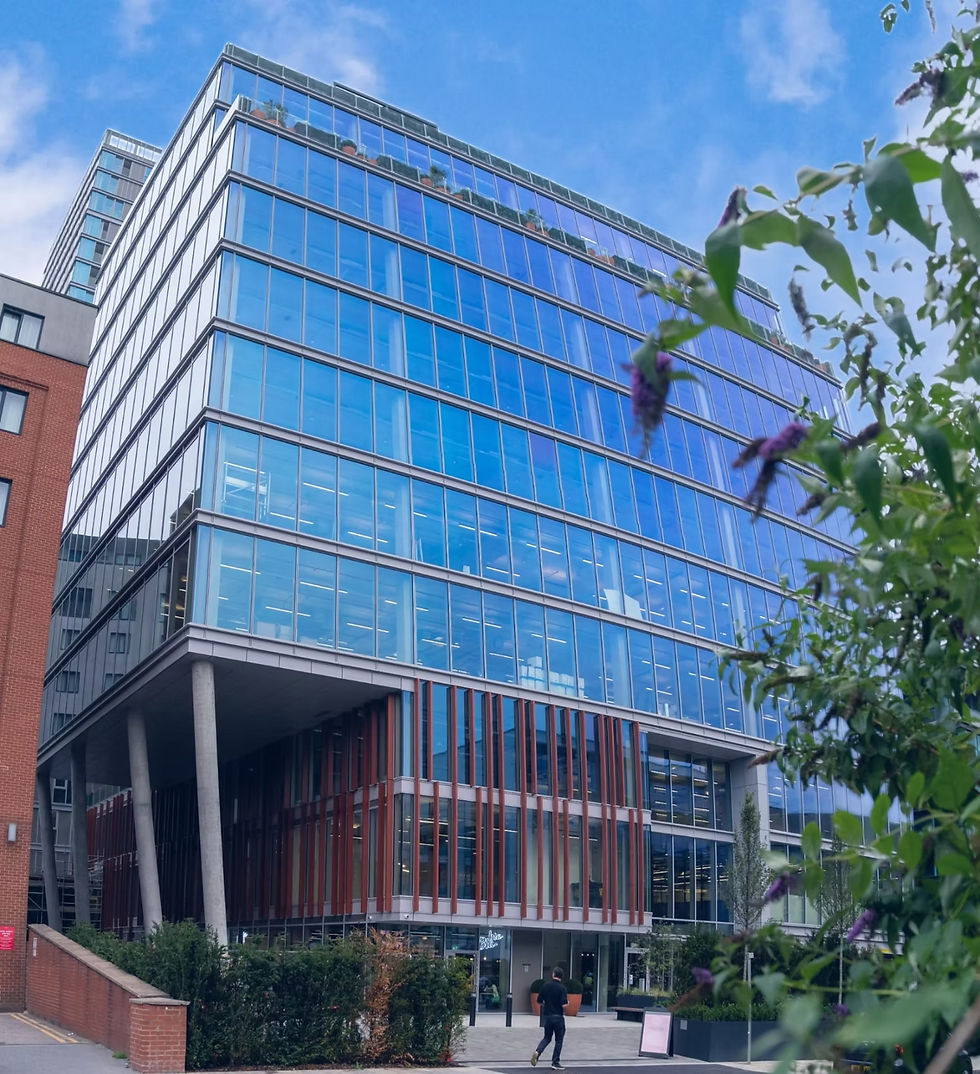
“With fast links into the capital and to Heathrow, The Clarendon Works offers an ideal location for forwardthinking businesses looking for best-in-class central London spec workspace – without central London overheads. We look forward to bringing Regal London’s design excellence, service -led approach and experience in residential, to bare on this office project prime location that will attract quality businesses to Watford town centre, enhancing further this prime location.”
Ghislaine Halpenny Director of ESG and Corporate Affairs
.jpg)
“Watford just works for us as a company – if it didn’t we wouldn’t have built our new Head Office here! We looked at other locations, but Watford just ticked all the boxes. We are able to attract some amazing talent in the local area and with our flexible approach to working and our new, easily accessible high tech offices, we are also able to attract the best people around.”
James Westoby, Managing Director Wunderman Thompson Commerce
"Home to major national and multi-national companies, Clarendon Road plays host to a spread of bluechip occupiers, who take advantage of Watford’s exceptional accessibility to London and the rest of the UK, via National Rail, London Underground and the motorway networks."
Watford has experienced recent regeneration and development. The area’s connectivity and amenities are attractive to companies looking to establish or expand a presence near London. The introduction of further new developments, such as a mixed-use scheme on Clarendon Road by Regal London, suggests strong confidence in the market and is aimed at meeting the growing demand for highquality office space.
"Rents in Watford are relatively affordable compared to other South East office markets, which has been a major attraction for businesses. Watford hosts a range of prominent office occupiers, reflecting its status as a key business hub. Notable companies with a significant presence include TK Maxx, which has established its new European headquarters there.
"Other significant tenants include KPMG and PwC, which underline Watford’s appeal to professional services firms. Additionally, the area has attracted tech companies like ACI and other prominent names like Ralph Lauren, FIS Global, Wunderman Thompson Commerce, Ricoh, and BioRad."
To find out more, visit knightfrank.com/research/article/2024-05-22-why-watford
Went
"An annual health assessment of the UK’s largest towns and cities outside London in 2024, undertaken by property consultancy Lambert Smith Hampton (LSH), has revealed Watford as the UK’s best place to live and work based on a number of metrics that contribute to overall growth prospects.
"The Hertfordshire town climbed from third position last year to knock Bath off top spot. Having debuted in the Top Ten in 2022, Watford’s steady climb reflects a transformation in its relative standing among the UK’s largest town centres.
"The LSH Vitality Index offers an objective health check on the UK’s largest 100 towns and cities outside of London based on a range of measures including economy, health and environment. Each location was ranked on three pillars: Economy & Business; Living; and Health & Environment.
For more information, visit lsh.co.uk/explore/research-and-views/research/2024/january/vitality-index-2024
WATFORD BUSINESS PLEDGE
Designed to support businesses in making a meaningful impact on the local economy, environment, and community.
Whether you're a start-up looking for space, a scale-up seeking investment or a global brand exploring relocation, our team offers tailored support to help you thrive.
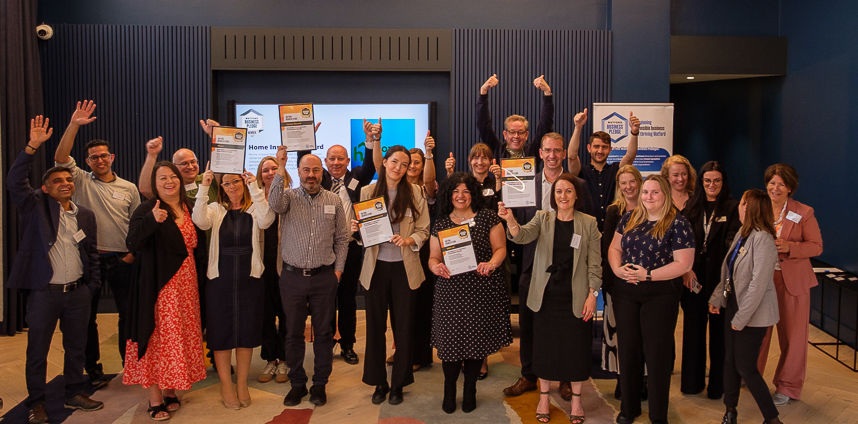
The Pledge focuses on five key commitments: promoting fair employment, creating local job opportunities, boosting Watford’s economy by buying locally, enhancing community wellbeing through social initiatives and adopting sustainable practices.
Here you can find insightful case studies and best practice examples from businesses who have joined the Watford Business Pledge, showcasing successful strategies and real-world applications to inspire and guide your own approach.
Check out the Knowledge Hub which has a plethora of resources and general business support to assist you with your application!


















-
Be an employer of choice – adopt good employment practices throughout your business
-
Support local employment – through your recruitment and training activities
-
Buying locally – strengthening the local economy by sourcing goods and services from Watford-based suppliers
-
Support the local community - focus your social value activities locally
-
Adopt a green approach – embed environmentally sustainable practices
-
CThe Watford Business Pledge is open to all organisations based in Watford. They can be of any size and looking to make a positive impact. Whether you’re a start-up, an SME, or a well-established enterprise, this initiative provides a platform to connect, learn, and grow while contributing to the prosperity of the local community.
Why you should get involved:
-
Positive brand: be recognised for being a responsible business
-
Productivity gains: employers benefit from improved rates of productivity when employees feel valued
-
Recruitment and retention: staff feeling valued and supported in the workplace can result in greater loyalty and lower staff turnover
-
Competitive advantage: be a leader and advocate for best business practices
-
Investor appeal: 4 out of 5 personal investors say that they will act based on sustainability or social responsibility factors
-
Build you local business profile and increase brand reputation
-
Your application content can be repurposed for tenders when bedding for new contracts or investments
-
Find ways to extend your good practice by learning from other Watford Business Pledge organisations
What you get for being involved:
-
Have a case study made for you and shared on various platforms
-
Exclusive networking opportunities with key business leaders and local government
-
Promotion through media and council channels to showcase their commitment to social responsibility
-
Use of the Watford Business Pledge logo to enhance their brand and demonstrate credibility
-
Support and resources to help meet pledge commitments and progress through recognition levels
-
Feature in the Watford Business Newsletter
-
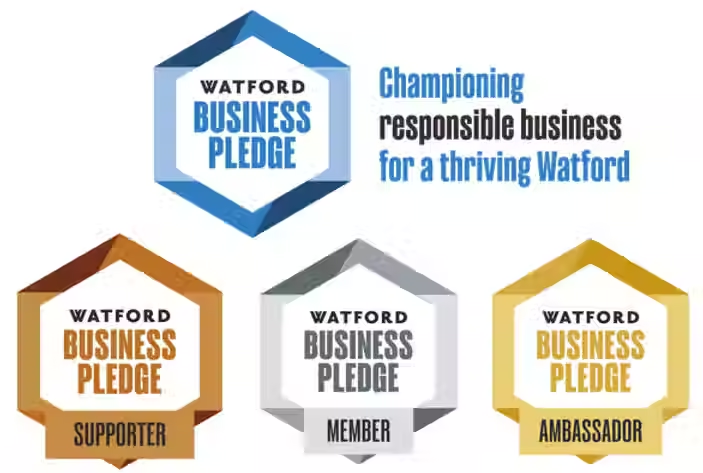
There are three award categories, businesses can be a Supporter, Member or an Ambassador of the Watford Business Pledge. Organisations will have the opportunity to apply for any level and the Watford Business Pledge Assessor Panel will determine if the organisation meets the requirements.
-
Supporter - an organisation becomes a Supporter if they can demonstrate that they have a clear plan to meet all the Pledge criteria relevant to their size of organisation. The organisation may have already met some of the criteria but not all the criteria across the 5 Commitments.
-
Member - an organisation becomes a Member if they can demonstrate that they have met all of the criteria across the 5 Commitments.
-
Ambassador - an organisation becomes an Ambassador when they have met all criteria across the 5 Commitments relevant to their size of organisation and demonstrably act as an ambassador for the Pledge around one or more if its 5 Commitments by supporting other business on their journey. There are a wife range of ways through which this can be demonstrated. Please head to the Knowledge Hub to find out more.
-
There are three award categories and the Watford Business Pledge Assessor Panel will assess each application based solely on the information provided.
The Assessor Panel members are representatives from Watford's business community and economy stakeholders.
Assessor Panel: Saffron Johnson of Watford and West Herts Chamber of Commerce, Chris Luff - Watford Chamber of Conscience, Jeremy Freeman - Business Brainbox, Lisa Clark - iSales Academy and Liza Armstrong of Hertfordshire Growth Hub.

Book a 30 minute meeting with the Economic Development team! They can meet you via Teams or come and visit your premises.
During this meeting the team will answer any questions you have about the Watford Business Pledge and can provide you with information about business support and upcoming events. The team can also be your first point of call for the Council and put you in contact with the other departments.
Contact the team today to book your meeting! economicdevelopment@watford.gov.uk